Medical VR training for anesthesiologists
Improving medical training through immersive simulation
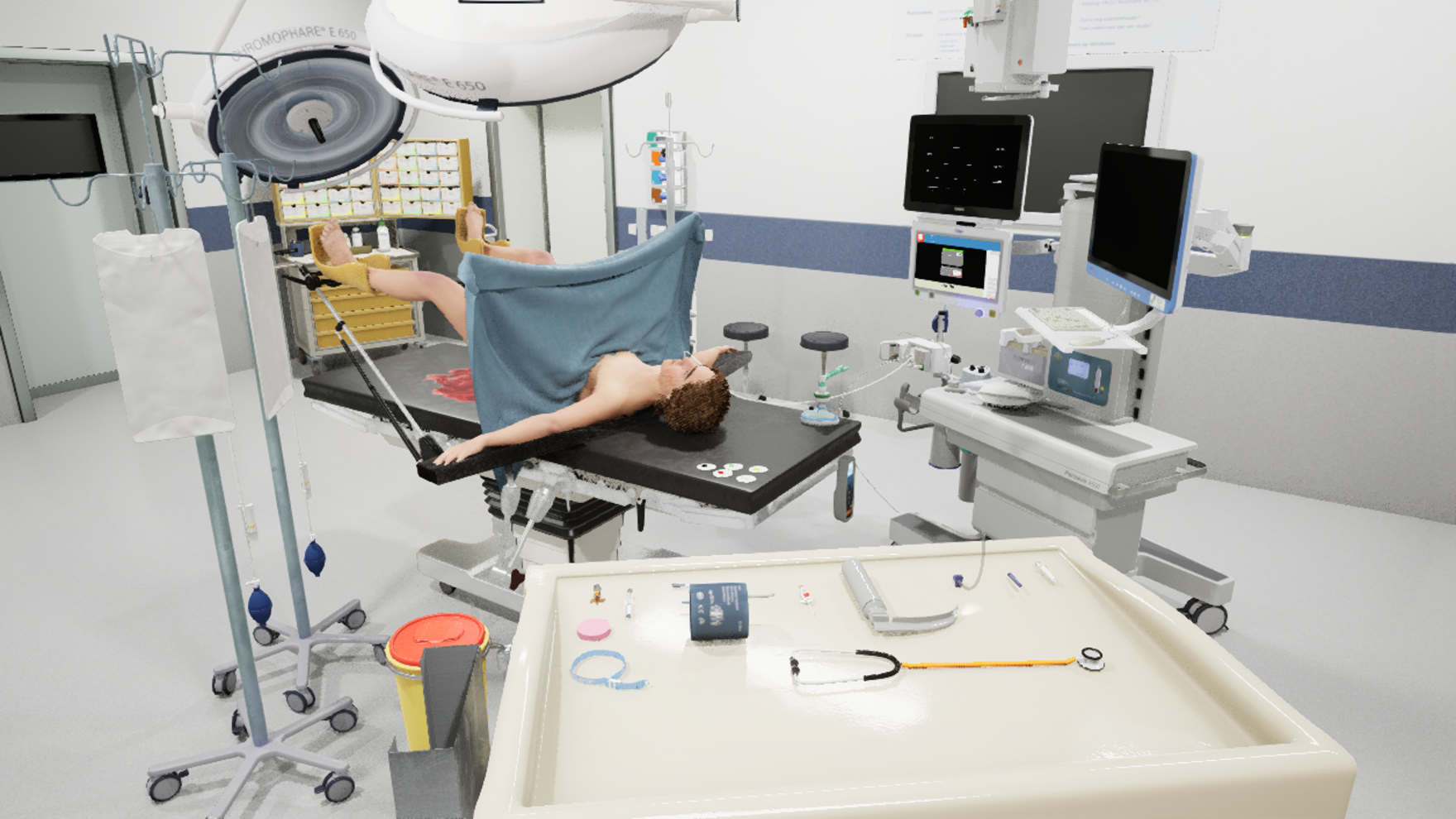
This multiplayer VR training application was developed to help anesthesiology students practice communication, teamwork, and clinical decision-making in high-pressure situations. Traditional training often relies on physical mannequins, which are effective for procedural practice but cannot display realistic patient symptoms or changing conditions.
The Challenge
How do you prepare future anesthesiologists for stressful medical emergencies when traditional training methods have limited flexibility?
The training needed to accurately simulate medical procedures, realistic patient responses, and effective team communication while remaining adaptable to different learning objectives.
The Solution
We created an immersive VR experience where students collaborate in a realistic medical scenario while an instructor controls the patient's condition in real time. This allows every training session to be adapted to the trainees' experience level, creating varied, repeatable learning experiences that prepare students for real clinical practice.
My Role
XR Designer • Project Lead
I combined interaction design, project leadership, and client collaboration throughout the development process. Working closely with medical professionals, I translated complex real-world workflows into intuitive VR interactions while balancing realism with the technical constraints of virtual reality.
XR Design
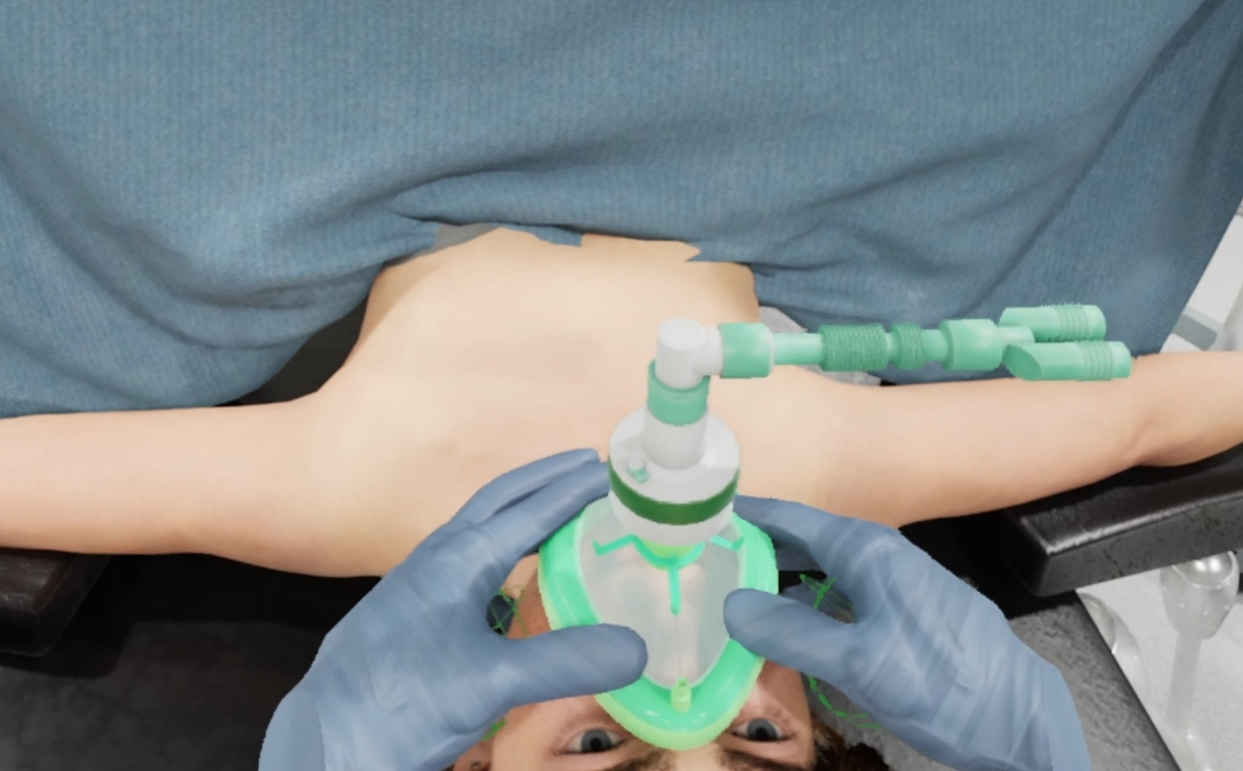
Designed VR interactions for medical procedures such as IV placement and patient intubation.
Translated real-world clinical workflows into intuitive and effective VR experiences.
Balanced medical accuracy with the limitations and opportunities of VR.
Collaboration
Worked within a multidisciplinary team to bring the training experience from concept to prototype.
Collaborated closely with designers, developers, and medical experts to ensure both usability and educational effectiveness.
Project Lead
Acted as a partial team lead, coordinating development efforts and maintaining alignment with project goals.
Managed communication with the client and other stakeholders.
Mentored interns throughout the development process.
User testing
Conducted multiple user-testing sessions in a hospital environment.
Gathered feedback directly from anesthesiologists and medical staff.
Iteratively refined interactions and training scenarios based on real-world insights.
Design Process
Understanding Clinical Practice
Together with anesthesiologists, we studied existing training methods and medical procedures to understand where VR could provide additional value. Particular attention was given to visual patient conditions and communication under pressure.
Designing for Realism
The objective was not to recreate every physical action exactly, but to preserve the learning experience. Every interaction was carefully designed to feel intuitive while supporting the educational goals and working within the constraints of VR technology
Validation Through User Testing
Regular user testing sessions in the hospital allowed us to validate both the interactions and the overall training experience. Feedback from students and medical professionals directly resulted in design improvements throughout the development process.
Outcome
The result is a flexible multiplayer VR training platform that enables anesthesiology students to safely practice clinical procedures, teamwork, and communication in realistic emergency scenarios. By combining immersive interaction design with instructor-led scenarios and iterative user testing, the project provides a scalable training solution that extends beyond the limitations of traditional mannequin-based education.
